
In machining, material selection directly impacts component performance, lifespan, and application value. As industrial manufacturing demands for lightweight, high-precision, and weather-resistant components grow, engineering plastics are increasingly used in machining. PETP (Polyethylene Terephthalate), one of the five major engineering plastics, stands out as an ideal choice for precision machining in electronics, automotive, and machinery sectors due to its exceptional all-around performance. This guide breaks down PETP’s core advantages, machining applications, and practical tips to help you select materials accurately and boost machining efficiency and product quality.
What is PETP?
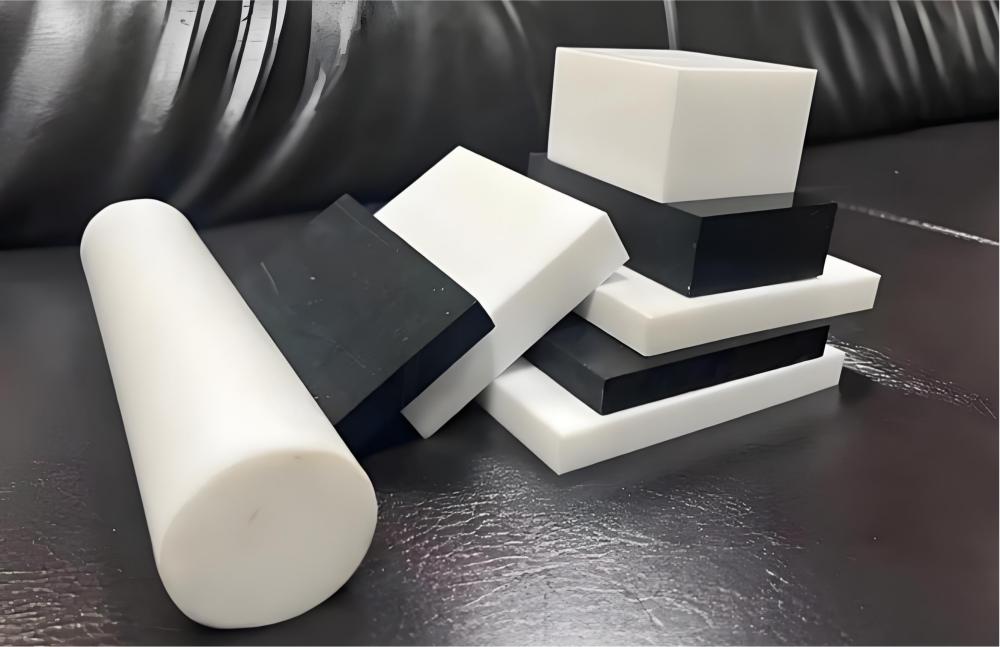
PETP (short for Polyethylene Terephthalate) is a crystalline, heat-moldable engineering plastic—often called polyester. Manufacturers make it via the polycondensation of terephthalic acid and ethylene glycol. It balances rigidity and toughness, resists heat and chemicals well, and is easy to process.
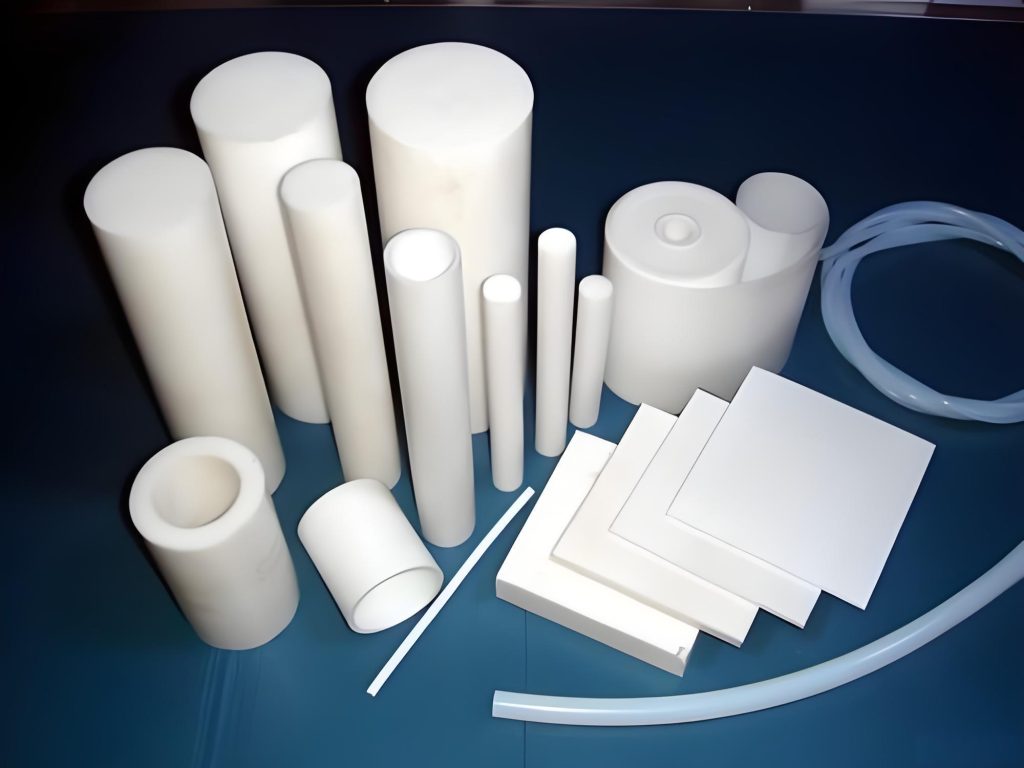
It’s one of the most common base materials in engineering plastics, sold as rods, sheets, films, etc. These forms work for various machining needs.
Chemical Composition
PETP (Polyethylene Terephthalate) is a crystalline, heat-moldable engineering plastic. It forms from two key monomers: terephthalic acid and ethylene glycol (via polycondensation). Its highly symmetrical molecular structure gives it great physical and mechanical properties.
Physical Characteristics
- It’s a crystalline material that absorbs little water. This keeps its dimensions stable even between -40℃ and 110℃.
- Its linear expansion coefficient is small. This helps it stay dimensionally precise when machined and used.
- It stands up well to weather and most chemicals: it resists weak acids and many organic solvents. But it can’t handle hot water immersion or strong alkali.
- You can get it as rods, sheets, or films. It works with many processing techniques.
Mechanical Characteristics
- High rigidity and hardness: Its Rockwell hardness hits D85. It has a max yield tensile strength of 88MPa and flexural strength of 100MPa.
- Great wear resistance and sliding ability: It has a low, stable friction coefficient. It wears far less than nylon (PA) and runs smoothly without extra lubrication.
- Strong creep resistance: It doesn’t deform easily under long-term dynamic loads. This makes machined parts last much longer.
- Better performance with tweaks: Glass fiber-reinforced PETP has even better mechanical properties and heat resistance. It can replace some metals to lighten equipment.
Core Properties of PETP: Why It’s Ideal for Precision Machining
PETP features a highly symmetrical molecular structure and strong crystalline orientation, granting unique advantages in mechanical performance, dimensional stability, and environmental adaptability—perfectly aligning with precision machining requirements. Its key properties are outlined below:
- Excellent Dimensional Stability: With ultra-low water absorption and a small linear expansion coefficient, PETP maintains precise dimensional accuracy across temperatures (-40℃ to 110℃) and during machining. It outperforms common POM materials in tolerance control, making it ideal for precision components like gears, cams, and connectors that demand strict dimensional accuracy.
- Superior Wear & Sliding Performance: PETP has a low, stable friction coefficient and far better wear resistance than nylon (PA). It enables smooth sliding without additional lubricants. Additionally, its excellent creep resistance prevents deformation under long-term dynamic loads, significantly extending the lifespan of machined components.
- High-Strength Mechanical Properties: Boasting high rigidity and hardness, PETP offers a yield tensile strength of up to 88MPa, flexural strength of 100MPa, and Shore hardness of D85. Glass fiber modification further enhances its mechanical properties and heat resistance, allowing it to replace some metal materials for structural parts and achieve equipment lightweighting.
- Broad Environmental Adaptability: PETP exhibits strong weather resistance and excellent chemical stability, withstanding weak acids and various organic solvents. Its physiological inertness also meets food contact safety requirements. Note, however, that PETP is not resistant to hot water immersion or strong alkaline environments—avoid these scenarios during machining and application.
- Versatile Process Compatibility: PETP can be formed via injection molding, extrusion, machining, electroplating, and other processes. Its exceptional machining performance allows for easy cutting, drilling, milling, and other operations, adapting to diverse component structural requirements.
PETP Machining Applications: Key Industries & Components
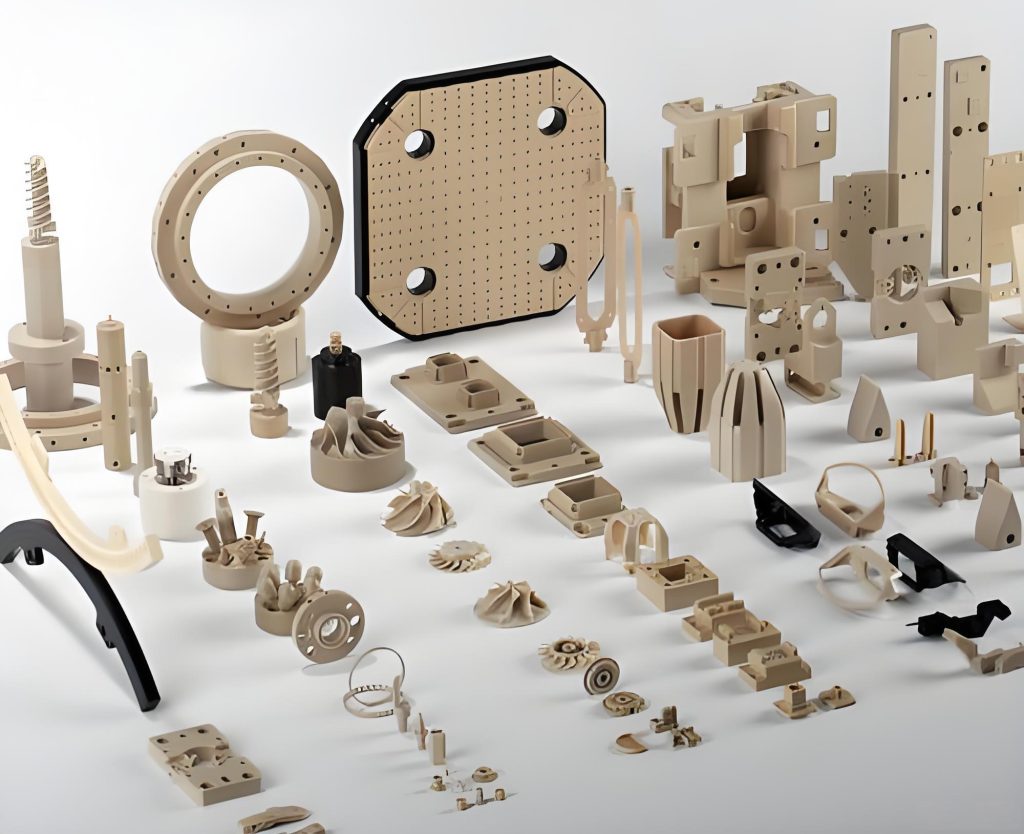
With these advantages, PETP is widely used in precision machining of electronics, automotive, machinery and other industries. Typical applications:
1. Food & Medical Sectors
With physiological inertness and food contact safety, PETP is used for food processing machinery components (pistons, guide parts) and medical equipment precision auxiliary parts, without adverse effects on food or human
2. Automotive Industry
PETP meets automotive demands for heat resistance, oil resistance and lightweight. Typical applications: distribution panel covers, ignition coils, valve components, exhaust parts and small motor casings. Glass fiber-reinforced PETP withstands 120℃ long-term operation, adapting to engine compartments and reducing vehicle weight.
3. General Machinery & Equipment
In machinery, PETP is used for transmission/structural components (gears, cams, pump housings, pulleys). Its wear and creep resistance lower maintenance costs. It’s also applied in microwave trays and outdoor billboards for good weather resistance.
4. Electronics & Electrical Industry
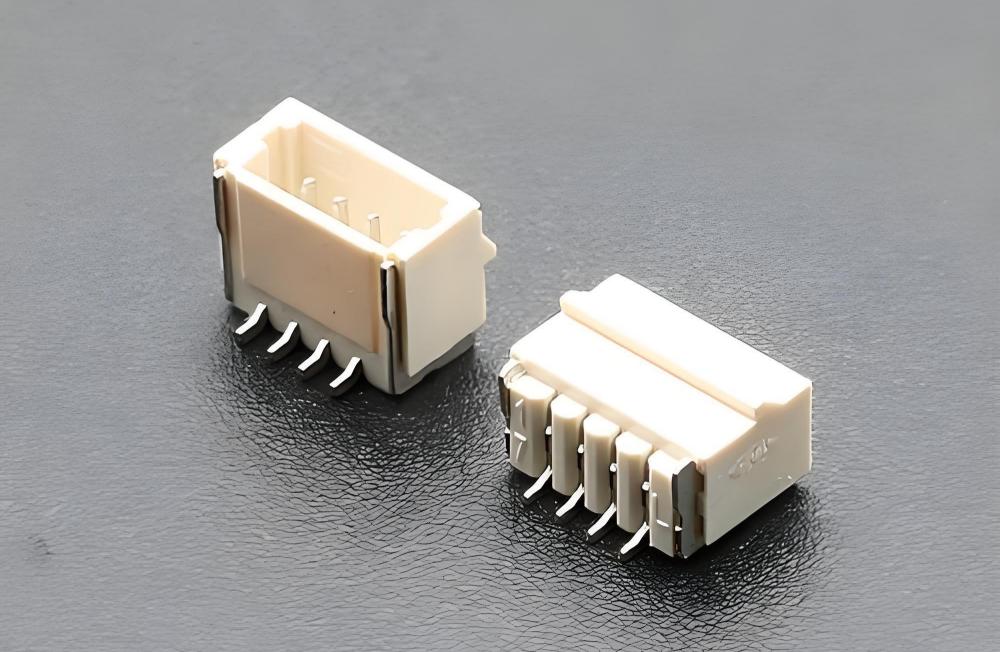
Excellent electrical insulation (dielectric strength: 60KV·mm; volume resistivity: up to 10¹⁴Ω·cm) and dimensional stability make PETP suitable for precision electronic components like IC housings, capacitor casings, transformer bobbins, relay bases and timer housings, ensuring stable electronic equipment operation.
Case Study: Precision Connector Machining for a Global Electronics Brand – A leading consumer electronics brand partnered with Richconn-cnc for custom PETP connector machining. The project required 0.02mm tolerance for the connector’s internal pinholes, along with superior electrical insulation and wear resistance for long-term plug-and-play use. We selected high-purity PETP rod stock, pre-dried it at 130℃ for 3 hours to eliminate moisture, and used 5-axis CNC machines with carbide tools for machining. Cutting speed was controlled at 150m/min with a low feed rate of 0.05mm/rev, and water-soluble cutting fluid was applied for cooling. The final products met the strict tolerance requirement, with a surface roughness of Ra ≤ 0.8μm. The client reported that the PETP connectors had a 30% longer lifespan than their previous nylon connectors, significantly reducing replacement costs.
Practical PETP Machining Tips: Boost Efficiency & Quality
While PETP offers excellent machining performance, the following core tips are critical to ensuring machining accuracy and surface quality:
- Material Pretreatment: Dry PETP rods or sheets before machining. We recommend drying at 120~140℃ for 2~5 hours to remove internal moisture, preventing bubbles, cracks, and other defects during machining while ensuring dimensional stability.
- Tool Selection & Parameter Setting: Use sharp high-speed steel or carbide tools to reduce cutting resistance and material deformation. Control cutting speed in the medium range (turning: 100~200m/min; milling: 50~100m/min) and adopt a low feed rate to avoid excessive cutting temperatures and protect material performance.
- Cooling & Lubrication: Use sufficient cutting fluid for cooling and lubrication during machining. Water-soluble cutting fluid is preferred—it reduces cutting temperatures, prevents material deformation or degradation from overheating, improves workpiece surface finish, and extends tool life.
- Precision Control: Utilize precision machining equipment (e.g., CNC machines) and leverage PETP’s good dimensional stability to strictly control tolerance ranges. For complex structural components, adopt a step-by-step machining strategy to reduce cumulative errors.
- Post-Processing Notes: Promptly remove cutting fluid residues from the workpiece surface after machining to avoid long-term contact-induced corrosion. For precision-required components, perform low-temperature tempering to further eliminate machining stress and enhance dimensional stability.
PETP vs. Common Engineering Plastics: Selection Guide
When selecting machining materials, PETP often competes with PA (nylon), POM (polyoxymethylene), and other engineering plastics. Below is a comparison of core performances to help you make accurate material choices:
| Performance Dimension | PETP | PA (Nylon) | POM (Polyoxymethylene) |
| Wear Resistance | Excellent, better than PA | Good, but requires lubrication | Excellent, outstanding self-lubrication |
| Dimensional Stability | Excellent, low water absorption | Poor, high hygroscopicity | Good, almost no water absorption |
| Mechanical Strength | High rigidity, high hardness | High toughness, good impact resistance | High hardness, high fatigue resistance |
| Application Scenarios | Precision electronic components, automotive structural parts, food machinery parts | Oil-resistant pipelines, sports equipment, load-bearing components | Precision gears, sliding bearings, printer parts |
In summary, PETP is the preferred choice if your products require high precision, low water absorption, and excellent wear resistance for multi-environment applications. Opt for PA if high toughness or oil resistance is a priority, and POM for extreme self-lubrication and fatigue resistance.
V. Choose Richconn-cnc for Professional PETP Machining Services
As a high-performance engineering plastic with balanced properties, PETP’s value in precision machining continues to grow. Its excellent dimensional stability, wear resistance, and broad environmental adaptability provide efficient solutions for component machining in electronics, automotive, machinery, and other industries. However, unlocking PETP’s full potential requires professional machining technology and precise process control.
Richconn-cnc specializes in precision machining of PETP and other engineering plastics. Equipped with professional CNC machines and an experienced technical team, we deliver customized machining solutions tailored to your product needs. We oversee quality at every stage—from material selection and pretreatment to finished product machining and post-processing—ensuring products meet strict precision and performance standards. If you have PETP machining requirements or need guidance on material selection and machining details, feel free to contact us for a consultation!