- Home
- »
- 3D Printing Service
- »
- Fused Deposition Modeling (FDM)
Fused Deposition Modeling (FDM)
With the help of FDM 3D printing technology, it is no longer necessary to design or manufacture expensive molds in the early stage of manufacturing products, and the designer’s ideas can be made a reality directly through 3D printers, which greatly reduces the cost and time.
What is FDM Printing?
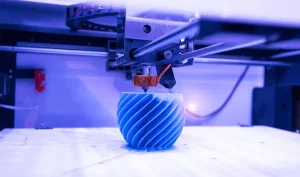
Fused Deposition Manufacturing (FDM) is one of the more common 3D printing technologies and one of the most versatile.FDM creates parts by extruding a plastic filament material through a nozzle and stacking it layer by layer in a table.FDM allows for simple parts to be printed with high accuracy, but due to the limitations of the process any overhanging features will require support material and will need to be removed after the print is complete. Therefore more complex parts with overhangs will be slightly less accurate.
How FDM 3D Printing Works
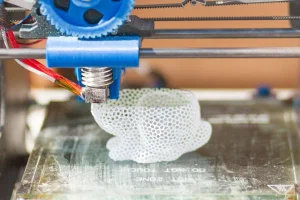
3D printers using FDM technology build parts by extruding thermoplastic filaments, layer by layer, starting from the bottom. The process is fairly simple:
Pre-processing: Pre-build software slices and positions the 3D CAD file, then calculates the path of the base thermoplastic and the location of any required support material.
Production: A 3D printer heats the thermoplastic to a semi-liquid state and then deposits it in tiny beads through an extrusion channel. If support or cushioning is needed, the 3D printer can also deposit removable material as a support.
Post-processing: Users can break off the support material or dissolve it with cleaners and water to get a usable part.
FDM 3D Printing Applications
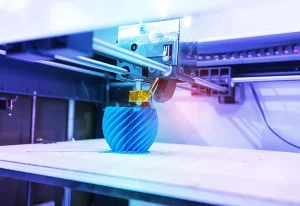
FDM is a great choice for prototyping and small production runs where parts need to be produced in a specific material.FDM can print in a large variety of materials including ABS, PC, and even performance materials such as Ultem and nylon, wood-like wood-plastic materials. It offers endless possibilities for crafts.
FDM 3D Printing Tips
FDM printing can print well when the general part overhang angle is 30-150°, without the need to set up additional supports. Chamfering rounded corners is an important way to avoid support in certain parts of the model, and in most cases this method will work. However, remember that support structures are still needed for horizontal protrusions of more than 2mm. In addition, FDM printing allows you to set the infill rate in the programmed slicing software, eliminating the need for manual hollowing to reduce the weight of the product, and with mesh support hollowing, there is some guarantee of strength.
FDM Printing Material Types
ABS (Acrylonitrile Butadiene Styrene Copolymer) is a common general-purpose thermoplastic 3D printing plastic, characterized by high strength, good toughness, excellent impact resistance, a certain degree of temperature resistance (around 80-90 ℃), it also has high dimensional stability and a certain degree of chemical resistance, it is one of the engineering plastics with more industrial applications.
Applications: engineering design, prototyping, functional testing, parts assembly, product shells, toys, car bodies, etc
ASA (Acrylonitrile Styrene Acrylate Copolymer) is also a general-purpose thermoplastic 3D printing consumable with similar mechanical properties as ABS, but ASA has excellent UV resistance and better chemical resistance.
Applications: Typically used for outdoor products, outdoor assembly parts, automotive parts, etc.
PLA (Polylactic Acid) is an environmentally friendly plasticizer with excellent biodegradability. It is a basic material for FDM, with excellent tensile strength, high hardness, good physical properties, low shrinkage, not durable, not temperature resistant, easy to soften and deform around 60℃. For some performance requirements are not high is widely used.
Applications: prototype design, creative animation, architectural models, toys, decorations, etc..
PC (polycarbonate) is a strong thermoplastic, which is characterized by impact resistance, high rigidity, heat resistance and flame retardancy. As a result, PC can absorb impacts, prevent deformation or rupture, and maintain dimensional stability even at high temperatures (120°C).
Applications: Typically used in the production of rigid parts, functional testing, assembly and manufacturing of finished parts, jigs and fixtures, and inspection fixtures.
PETG (polyethylene terephthalate) is an amorphous copolyester. It has certain transparency, shrinkage resistance, dimensional stability and chemical resistance, and is easy to process.
Applications: prototyping, functional testing, parts assembly, toys and decorations, etc.
PA nylon (polyamide) is a widely used engineering plastic, usually PA6/6.6. Well-balanced properties, good rigidity, toughness and impact resistance, excellent mechanical properties, high resistance to high temperatures (around 180°C) and low coefficient of friction.
Applications: production of engineering parts, tools, ergonomic tools and moving parts.
PA6-CF (Reinforced Nylon Carbon Fiber) is a composite engineering plastic with high strength, light weight, high stiffness, high impact resistance, and resistance to thermal deformation. It has better high temperature resistance (210℃), and the surface of the printed parts is matte with certain flame retardant.
Applications: electronic equipment shells, jigs and fixtures, jigs and fixtures, automotive parts, assembly parts, etc.
PA6-GF (reinforced nylon glass fiber) and nylon carbon fiber materials with similar characteristics, print parts have high rigidity, high strength, high toughness, corrosion resistance and temperature resistance (190 ℃).
Applications: electronic housings, automotive parts, jigs and fixtures, consumer electronics, home appliances, etc.
TPU (thermoplastic polyurethane elastomer rubber), with abrasion resistance, high strength, high elasticity, outstanding cold resistance, oil resistance, water resistance, mold resistance, good flexibility.
Applications: automotive parts, footwear, tubing, sports equipment design, fashion design and medical rehabilitation applications.
PEEK (polyether ether ketone) a linear aromatic polymer materials, excellent performance of special engineering plastics, can replace the metal. It has high mechanical properties, high temperature resistance, chemical resistance, abrasion resistance, flame retardant and biocompatibility.
Applications: aerospace, automotive manufacturing, electrical and electronic, petrochemical, medical, household appliances, etc.
Richconn’s Fused Deposition Modeling Services
Richconn offers fused deposition modeling services for rapid prototyping, functional parts and end-use products. We utilize state-of-the-art 3D printers, which allow us to produce high-performance parts with fast turnaround times. Our experienced engineers are experts in the field of FDM and can handle 3D printing projects in a wide range of materials such as ABS, PLA, PBS, PC, TPU, and more. We have the ability to print small to large parts in a variety of shapes, and offer over 40 colors to choose from as well.
Due to our strict quality control process we are confident in providing quality parts to our customers, and our sales team is online 24/7 to ensure you get the fastest response possible.
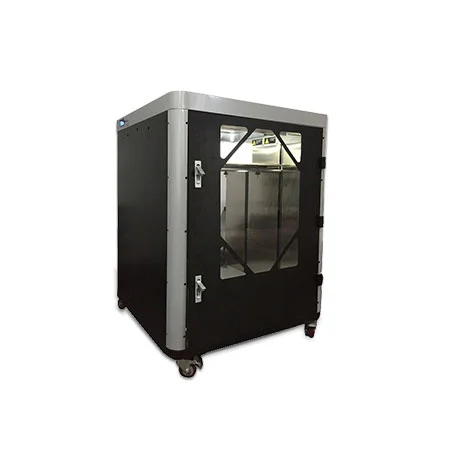
Our FDM 3D Printing Equipment
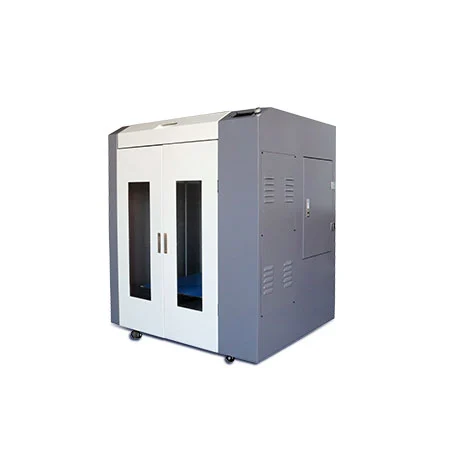
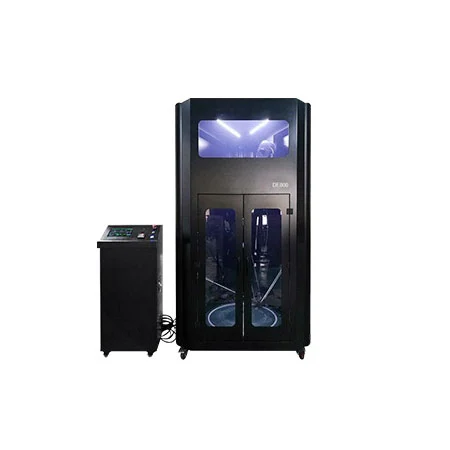
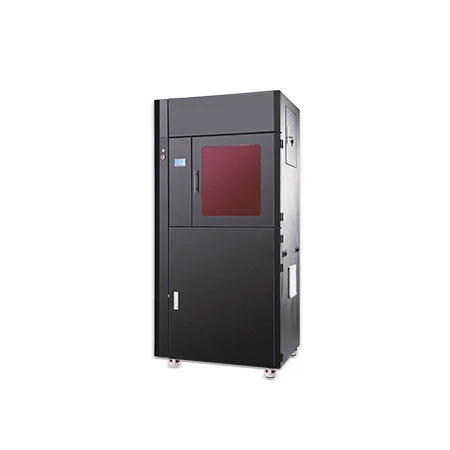
Richconn utilizes industry-leading FDM 3D printers that reduce the potential for error, with tolerances of +/- 0.004″ or +/- 0.002″ per inch, ensuring that the parts we make are accurate.
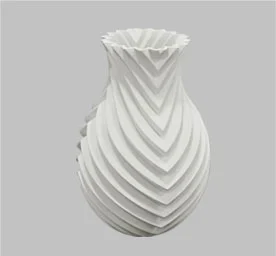
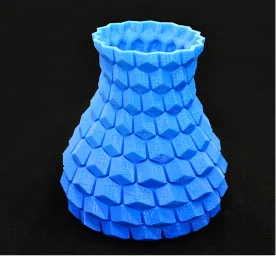
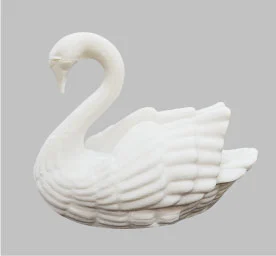
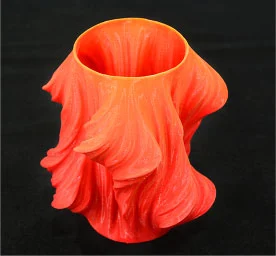
FDM 3D Printed Parts Gallery


Get An Accurate Quote Quickly
We will contact you within 1 working day, please pay attention to theemail with the suffix richconn.com.cn
Email:
sales@richconn.com.cn
Phone:
+86-0755-28025755
Address:
1212, Zehua Building, Intersection of Longhua Meilong Road and Donghuanyi Road, Songhe Community, Longhua Street, Longhua District, Shenzhen, GuangDong, China
Factory Address:
Longfu Industrial Zone, Tongsheng community, Dalang street, Longhua District, Shenzhen